


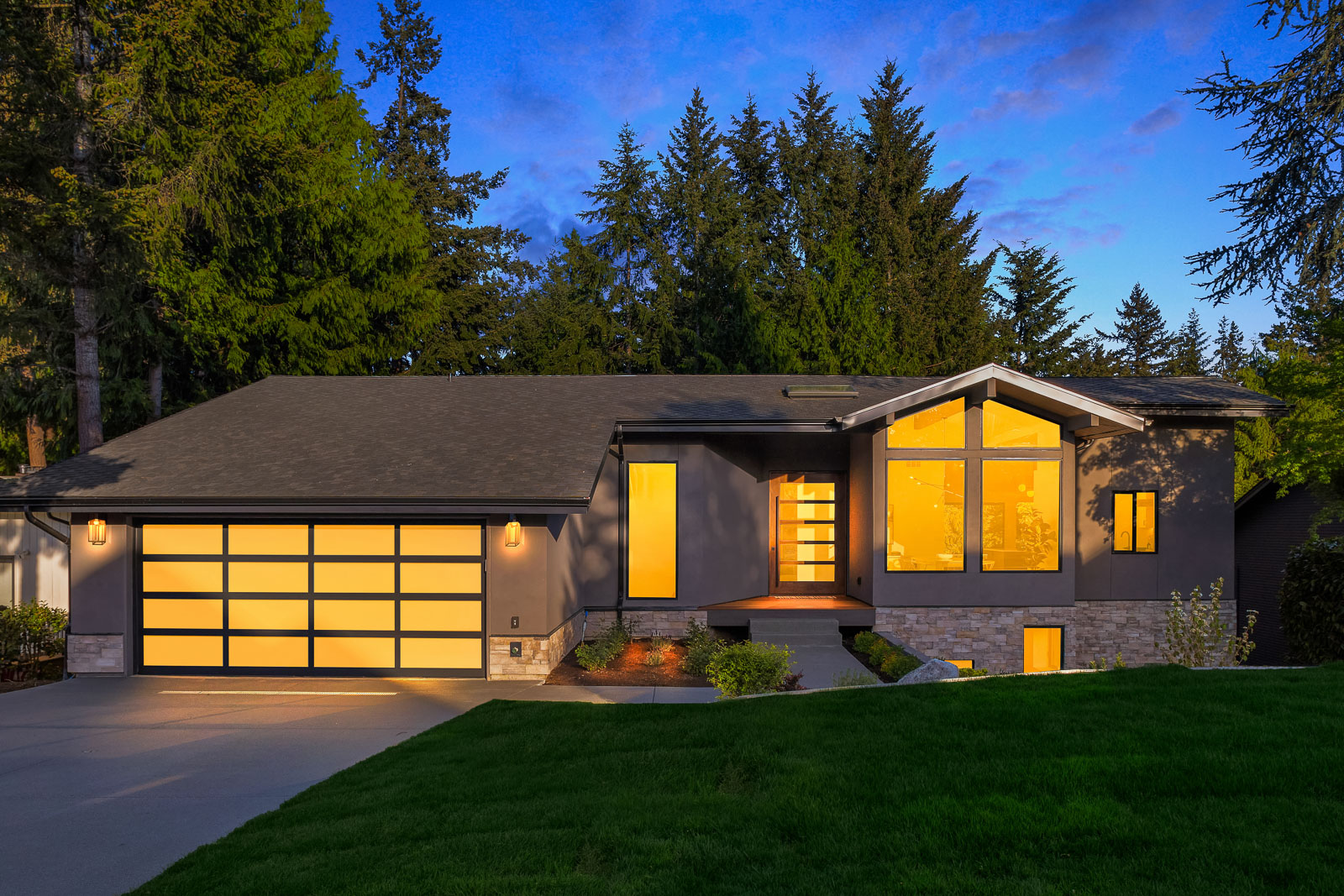

After 34 years building custom homes across Bellevue and the surrounding communities, Tennyson Homes has watched more homeowners reach the same fork in the road: stay on the lot they already own and build new, or sell and relocate to find something better. Neither path is automatically the right one. This guide lays out how each option actually plays out in Bellevue's market, so you can make the call with real information instead of guesswork.
Explore Custom Home Building | Get in Touch
TL;DR: Bellevue homeowners who already own a well-located lot are increasingly choosing to rebuild in place instead of competing for scarce, move-in-ready inventory. The math often favors rebuilding when the lot itself has more value than the structure sitting on it, when the resale market cannot deliver the layout a family actually wants, or when the cost of buying a comparable home approaches the cost of building new. There is no single right answer. This guide compares the two paths directly so you can weigh your own lot, budget, and priorities before deciding.
Rebuild vs. Relocate: How the Two Paths Compare
The table below lays out the factors that matter most when comparing these two paths directly. Every Bellevue lot and every family's situation is different, so treat this as a framework for your own comparison. Permitting requirements, fees, and review timelines are set by the City of Bellevue and change over time, so confirm anything specific to your project with the city before finalizing plans.
| Factor | Rebuild in Place | Relocate and Buy |
|---|---|---|
| Design and finish control | Full control over layout, materials, and every finish decision from the ground up. | Limited to whatever the existing home offers; changing it after closing means a separate renovation project. |
| Cost structure | Construction cost plus site prep and demolition. Custom home construction in the Seattle area generally runs $500 to $900 per square foot as a market planning benchmark, and land is already owned. | Purchase price plus transaction costs such as agent commissions, closing costs, and transfer taxes, on top of whatever premium a move-in ready listing commands. |
| Permitting complexity | Reviewed as new construction: application, plan review, contractor approval, and inspections through the City of Bellevue. Confirm current requirements directly with the city. | No permitting for the purchase itself, though any post-purchase renovation triggers its own permit process. |
| Timeline | Design, permitting, and construction each take real time, and the pre-construction phase can run as long as the build itself. | Faster to occupancy when the right listing is available, though finding it in a competitive market can stretch the search out significantly. |
| Disruption during the project | Temporary housing is typically needed for the duration of construction. | No construction disruption with a move-in ready purchase; any later renovation creates its own. |
| Neighborhood continuity | Stay in the neighborhood, school district, and community you already know. | Relocating means adjusting to a new neighborhood, and in Bellevue a truly comparable lot in a comparable location is rare. |
| Infrastructure and utilities | New construction can trigger new utility connections and public works requirements that an existing home already has in place. | The existing home retains its current utility connections; only a later major renovation would revisit that. |
Why More Bellevue Homeowners Are Choosing to Rebuild in Place
Buyers who already know exactly what they want run into a specific problem in Bellevue: the homes that hit the market at the premium end don't sit for long. Multiple offers are common, and whoever wins still ends up with a floor plan, a finish package, and a set of tradeoffs someone else made years ago. For a family that has toured dozens of listings without finding one that actually fits, that gap between what's for sale and what they actually want is where this decision usually starts.
At the same time, buildable vacant lots are genuinely scarce in Bellevue. Teardown-rebuild projects, not raw land purchases, are how most new construction happens here now. That scarcity cuts both ways: it makes relocating harder, because there is less true inventory to relocate into, and it makes the lot a homeowner already owns more valuable, because land itself is doing a growing share of the work in any project's total cost. A homeowner sitting on a well-located Bellevue lot is sitting on an asset that is difficult, and often expensive, to replace by buying somewhere else.
This is why the question, increasingly framed as rebuild in place vs. buy a new home in Bellevue, comes up earlier in the process than it used to. Plenty of homeowners assume relocating is the simpler path until they run the numbers. Rebuilding on a lot you already own can land close to what buying a comparable home would cost, and it does not put you in a bidding war.
When Rebuilding Makes the Most Sense
Weighing a tear-down and rebuild vs. relocate usually comes down to a handful of concrete situations. Rebuilding on the lot you already own is the stronger choice when several of these apply.
The current house no longer works and would need major intervention either way. When the layout has stopped fitting your lifestyle, and the home would require substantial work regardless of which path gets chosen, holding onto it for its own sake stops making financial sense.
The lot itself is the reason to stay. A well-located Bellevue lot, close to schools, work, or a waterfront view, is genuinely difficult to replace by relocating. Rebuilding lets a homeowner keep the location and start over on everything else.
The resale market keeps coming up short. Homeowners who have searched seriously and consistently found that available homes require too much compromise are the core audience for a custom home rebuild in Bellevue.
Buying a comparable move-in-ready home costs close to what rebuilding would. In Bellevue's premium segment, this calculation sometimes tips toward rebuilding, especially once the value of land already owned is factored in.
Homeowners weighing whether they should rebuild or move in Bellevue rarely find that only one of these applies. Usually it's a combination, and that combination is what actually drives the decision.
How This Differs From Remodeling in Place
Not every homeowner facing this decision is choosing between rebuilding and relocating. Some are deciding something narrower: whether the home they already have is worth saving at all, or whether it makes more sense to tear it down and start over on the same lot. That is a related but separate question, and we cover it in detail in our guide on whether to remodel or rebuild an older home. Getting clear on which one applies to your situation first makes the rest of this comparison more useful.
What Happens Before You Commit to a Rebuild?
Deciding to explore a rebuild does not mean committing to construction. Before design and permitting begin, there is an early feasibility stage where you can determine whether the home you want, the lot you own, and the budget you have actually line up.
1. Evaluate the property
Start with the lot itself. Its size, slope, access, existing utilities, and other site conditions can influence what can reasonably be built and what additional work may be required. The goal at this stage is to identify major constraints before investing heavily in design.
2. Define what you want to build
You do not need a finished floor plan yet, but you should have a general sense of your priorities. Approximate square footage, number of bedrooms and bathrooms, layout, architectural direction, and must-have features give the project enough definition for an initial evaluation.
3. Develop a preliminary budget
With the lot and general scope understood, you can begin looking at the project as a whole rather than construction cost alone. Site preparation, demolition, design, engineering, permitting, utilities, and the home itself all contribute to the overall investment.
4. Decide whether the project makes sense
The purpose of this early work is to answer the bigger question before moving into detailed design: does rebuilding this particular home on this particular lot make sense for your goals and budget? If the answer is yes, you can move forward with much more clarity about what the project will involve.
What to Expect from the Permitting Process in Bellevue
Permitting anxiety is one of the most common reasons homeowners hesitate before committing to a rebuild, and it deserves a straight answer. A teardown and rebuild in Bellevue is reviewed as new construction, moving through application, plan review, contractor approval, and inspections with the city.
One point of confusion worth clearing up directly: design review in Bellevue is a separate Land Use Permit. Whether a specific project triggers it depends on the property and its scope, and that is a question to confirm with the City of Bellevue rather than assume either way.
New construction can also trigger utility connection and public works requirements that an existing home, remodeled or not, may already satisfy. That is a real cost and timeline variable worth building into pre-construction planning early. None of this replaces confirming current requirements directly. Fees, timelines, and setback rules are set by the city, and they change, so the City of Bellevue's residential building permits page is the authoritative source. What that experience does provide is a sense of how the custom home building process works from lot evaluation through move-in, and a custom home builder in Bellevue who has been through this repeatedly across many local lots is often the difference between a submittal that stalls and one that moves.
The coordination burden is often the part homeowners underestimate. A rebuild involves an architect, a general contractor, engineers, trade partners, and a permitting office, all moving at different speeds and answering to different timelines. Homeowners who take on that coordination themselves, without a single accountable point of contact, are the ones most likely to see a project stall between phases. That is a separate risk from the permitting process itself, and it is worth weighing before the project starts rather than after it is already underway.
FAQ: Rebuilding Instead of Relocating in Bellevue
Is it cheaper to rebuild or relocate in Bellevue?
There’s no universal answer. Rebuilding carries construction costs plus demolition and site prep; relocating carries a purchase premium plus transaction costs like agent commissions and closing costs.
In Bellevue’s premium market, homeowners who already own a well-located lot often find that rebuilding compares favorably to buying at current prices, especially once design control and staying in a known neighborhood are weighed alongside the number. A detailed pre-construction budget is the only reliable way to run this comparison for a specific lot.
What does it cost to rebuild a home in the Seattle area?
Custom home construction in the Seattle area generally runs $500 to $900 per square foot as a market planning benchmark. Land is a separate cost and, in Bellevue, often represents a meaningful share of total project investment on its own. Lot conditions, design complexity, and finish selections all move the final number within, and sometimes outside, that range.
Should I rebuild or move if I already own a good lot in Bellevue?
If the lot is the reason to stay, and the existing home no longer fits how the family lives or would need major work regardless, rebuilding is usually worth serious consideration. If the lot itself has real limitations, such as size, slope, or location, that a rebuild cannot fix, relocating may make more sense. The honest answer depends on the specific lot, which is why an early feasibility conversation with a builder is worth more than a general rule.
What are the permitting steps for a teardown rebuild in Bellevue?
A teardown rebuild in Bellevue moves through application, plan review, contractor approval, and inspections as new construction. Design review is a separate Land Use Permit and is not a routine step for most residential projects. New construction can also trigger utility connection and public works requirements. Confirm current timelines, fees, and requirements directly with the City of Bellevue before finalizing plans.
Ready to Explore a Rebuild on Your Bellevue Lot?
Tennyson Homes is a family-owned custom home builder and general contractor with 34 years of experience building across Bellevue and the surrounding communities. We work with the architect you choose, or connect you with our vetted regional network, and a dedicated project manager stays your single point of contact across every architect, trade partner, and permitting office involved in the project, from the first conversation through move-in. That single point of contact is the difference between managing five separate relationships yourself and having one person accountable for how they all fit together.
Every lot is different, and the right path starts with an honest conversation about what yours can actually support.
